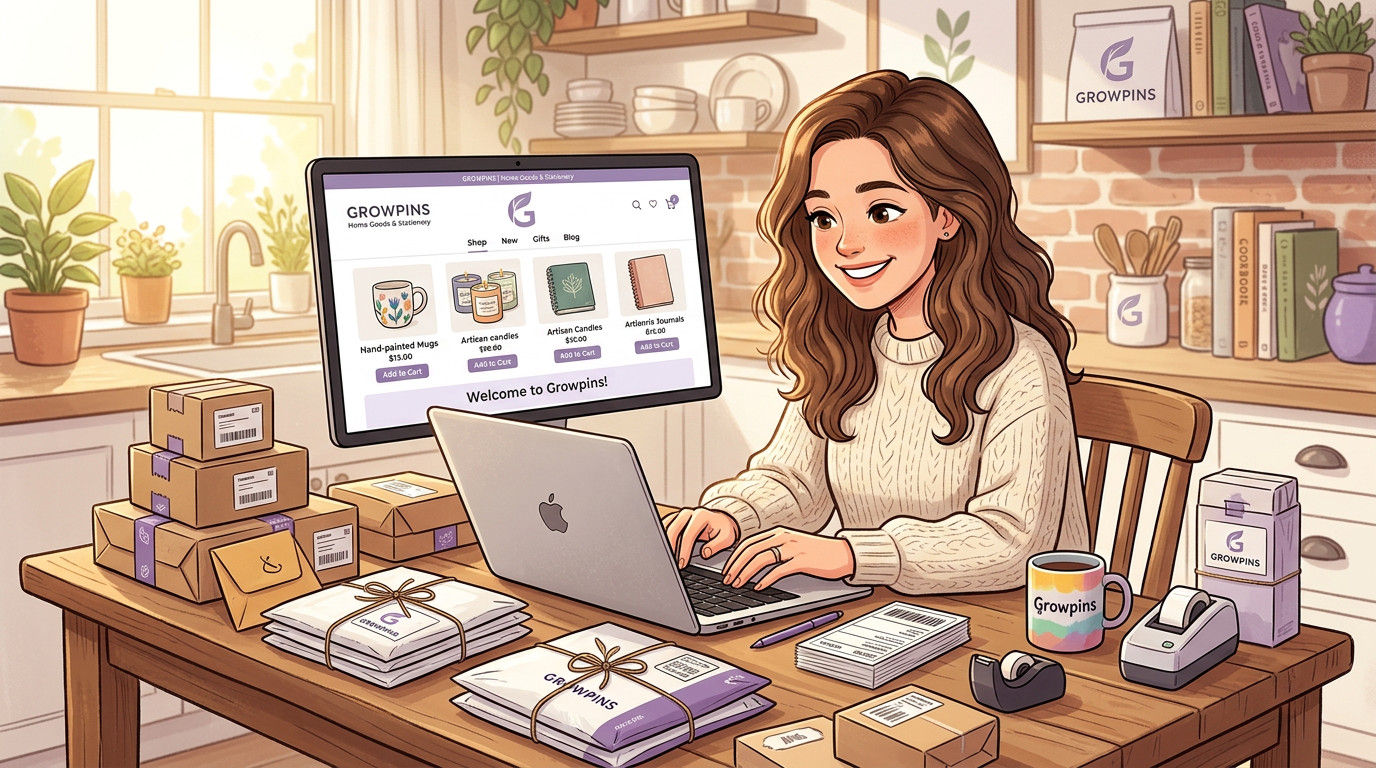
How to Sell Online Without a Website in 2026 (Best Options)
You don't need to build a website to sell online. Here are the best options in 2026, including one that gets you live in under an hour.
How to Sell Online Without a Website in 2026
By Dokun Bamigboye · Growpins AI
You can sell online without a website using marketplaces (Etsy, Amazon, Jumia), social media shops (Instagram, TikTok), WhatsApp Business, or a store builder like Growpins. Store builders are the best long-term option — they give you a branded URL, Google SEO, and zero commission fees without requiring any coding or web development skills.
You want to sell online, but building a website from scratch feels overwhelming and expensive. The good news: you don't need to build one. Millions of sellers run profitable online businesses without ever writing a single line of code or hiring a web developer.
This guide covers every realistic option for selling online without a traditional website, the honest pros and cons of each, and which approach gives you the best shot at building something sustainable in 2026.
Quick Navigation
Option 1: Sell on Marketplaces (Etsy, Amazon, Jumia)
Marketplaces are platforms where multiple sellers list products side by side. Buyers come to the platform already, so you're tapping into an existing audience.
Popular marketplaces
Etsy: Global marketplace for handmade, vintage, and unique items
Amazon: Massive global reach; highly competitive
Jumia: Nigeria's largest e-commerce platform; high traffic, established trust
Flipkart: India's premier homegrown marketplace, well-known for its massive electronics and fashion sales
Konga: Nigerian marketplace with growing seller base
Pros
Built-in audience: no need to drive your own traffic initially
Established trust: buyers already trust the platform
Easy to get started with no technical skills
Cons
High fees: Marketplaces take 6–15% of every sale, sometimes more
No brand ownership: Buyers associate the purchase with Jumia or Etsy, not with you
You don't own the customer: Can't message buyers directly for repeat sales
Intense competition: Your product sits next to dozens of cheaper alternatives
Platform risk: Account suspension, algorithm changes, or new fees can wipe your business overnight
Limited customisation: No control over how your brand looks
Marketplaces are excellent for validating a product idea or making quick initial sales. But they're a difficult foundation for a long-term brand.
Option 2: Sell on Social Media
Instagram, Facebook, and TikTok all have native shopping features that let you sell directly without a separate website.
What's available
Instagram Shopping: Tag products in posts and stories; buyers check out within Instagram or are redirected to your store
Facebook Marketplace: Good for local sales; buyers message you directly
Facebook Shops: Create a simple storefront within your Facebook Page
TikTok Shop: Growing fast; in-video product links; works well for impulse purchases
Pros
Meet buyers where they already spend time
Visual formats (video, reels) work well for product discovery
Organic reach is still possible with good content
Low or zero platform fees for organic social sales
Cons
Algorithm dependency: Organic reach can drop to near-zero overnight; no guaranteed visibility
No SEO benefit: Your products won't show up in Google searches
Inconsistent sales: Peaks when you post, droughts when you don't
Hard to scale: Manually responding to DMs and processing orders is not sustainable at volume
Limited product catalogues: Social shop features are basic compared to a real store
Social media is essential as a marketing channel, but relying on it as your only sales channel puts you at the mercy of platforms you don't control.
Option 3: Sell via WhatsApp & Messaging
WhatsApp Business is widely used across Africa for product sales, especially for fashion, food, and handmade goods. Sellers share product photos in groups or via Status, and buyers message to order.
Pros
Direct, personal connection with buyers
High engagement: WhatsApp messages are almost always read
Works with existing contacts and referrals
WhatsApp Business has basic catalogue features
Cons
Not scalable: Manually managing orders, payments, and delivery for many customers is exhausting
No discoverability: New customers can't find you; only works if they already have your number
No order management: No automated tracking, invoices, or purchase history
Payment friction: Chasing bank transfers or coordinating payments manually loses sales
WhatsApp selling is excellent for early-stage testing and loyal repeat customers. It becomes a bottleneck the moment you try to grow.
Option 4: Use a Store Builder (Best Option)
A store builder gives you a professional online store, your own URL, your own brand, your own product catalogue. Without any coding or web development. You sign up, add your products, and you're open for business.
This is the option that combines the benefits of all the others while avoiding their biggest weaknesses:
You own your brand and customer relationships (unlike marketplaces)
Your products can rank on Google (unlike social-only selling)
Orders are managed automatically (unlike WhatsApp selling)
You control your pricing, policies, and store experience
What to look for in a store builder
No coding required: Drag-and-drop or template-based setup
Mobile-optimised: Most buyers browse on phone; your store must look great on mobile
SEO features: Custom meta titles, descriptions, and structured data so Google can find your products
Fast setup: You should be able to launch in under an hour
Affordable: No commission fees eating into every sale
Flexible checkout: Not every market has universal payment processors; your platform needs to work for your buyers
Growpins is built specifically for sellers who want a professional store without the complexity. Setup takes under an hour, there are no transaction fees, and it's designed to work for sellers in African markets and beyond If you're currently on Shopify and thinking of switching, see our guide to the best Shopify alternatives for small businesses.
How the Options Compare
Option | Own Brand | Google SEO | Scales Well | Platform Fees |
|---|---|---|---|---|
Marketplace (Jumia, Etsy) | ✗ | Partial | Partial | 6–15% per sale |
Social Media Shops | Partial | ✗ | ✗ | 0–5% |
WhatsApp Business | ✓ | ✗ | ✗ | None |
Store Builder (Growpins) | ✓ | ✓ | ✓ | 0% |
The right answer for most sellers is a combination: use a store builder as your foundation, then drive traffic to it through social media and marketplaces. This way you own your primary sales channel but still benefit from the audiences those platforms provide.
How to Start Selling Today on Growpins
If you've decided a store builder is the right foundation, here's how to go from zero to live store on Growpins in under an hour:
Step 1: Sign up (2 minutes)
Go to growpins.ai/start-online-store and create your account. No credit card required to get started.
Step 2: Set up your store profile (10 minutes)
Add your store name, a banner image, and a short store description. This is what buyers see when they visit your store. Choose a category that fits your products. This helps Growpins' directory put your store in front of the right buyers browsing the discover page.
Step 3: Add your products (20–40 minutes)
Upload product photos, write descriptions, and set your prices. Growpins' AI can help generate SEO-optimised descriptions if you're not sure what to write. Add as many products as you want; there's no per-product limit For a full walkthrough of getting your first products live, see our guide on getting your products online in under 20 minutes.
Step 4: Set up your contact and payment info
Add your WhatsApp number and/or redirect link so buyers know how to reach you or pay. Growpins doesn't process payments directly. Your store links buyers to your preferred checkout (WhatsApp, Stripe, Selar, Flutterwave, bank transfer, your choice).
Step 5: Share your store link
Your Growpins store has its own URL (e.g., growpins.ai/shop/yourstore). Share it everywhere: Instagram bio, WhatsApp Business profile, email signature, business cards. This is your home on the internet, no website needed.
See how it looks alongside other stores already selling on Growpins at growpins.ai/shops.
Frequently Asked Questions
Do I need any technical skills to set up a Growpins store?
No. If you can use WhatsApp and take a photo, you have all the skills you need. The setup is designed for people with no technical background, with no coding, no hosting, no domain registration required.
Can I sell on Growpins, Amazon, Etsy, and Jumia at the same time?
Yes, and many sellers do. Use Growpins as your branded home base and list on marketplaces for additional visibility. When a marketplace buyer becomes a repeat customer, direct them to your Growpins store so future orders come fee-free.
What if I already sell on Instagram, do I still need a store?
Instagram is a great marketing channel, but it has real limits: buyers can't search for you by keyword, you can't rank on Google, and if your account gets restricted, you lose everything. A store builder gives you a stable foundation that social media can feed traffic to, but can't replace.
Who is the target audience for Growpins?
Growpins is built for sellers worldwide. The platform allows entrepreneurs and businesses from any country to set up a store link that is instantly accessible to customers globally.
What does Growpins cost?
Growpins has flat subscription plans with no transaction fees. See full pricing details here. There's no commission taken on any sale.
Your store is live the moment you publish your first product. The next step is driving your first sale — see our step-by-step guide on how to get your first online sale for exactly what to do next.
Start your free Growpins store →
Related reading: Shopify alternatives for small businesses in 2026 · How to get your first online sale · Get your products online in under 20 minutes
Share this post
Have a question about this post? Contact the author